Franchise Hockey: Pro GM
- 4.3
- Rating
- 500.00K
- Installs
- Free
- Price

 Analysis by App-foxy
I went into Franchise Hockey: Pro GM expecting a quick sports game and found something closer to a compact hockey management challenge. You are not mainly controlling skaters shift by shift; you are making the decisions that shape a franchise. That distinction matters. If you enjoy building a team, weighing risks and planning around a long season, this game has more to offer than its simple store summary suggests. If you want immediate arcade action, it is probably the wrong place to start.
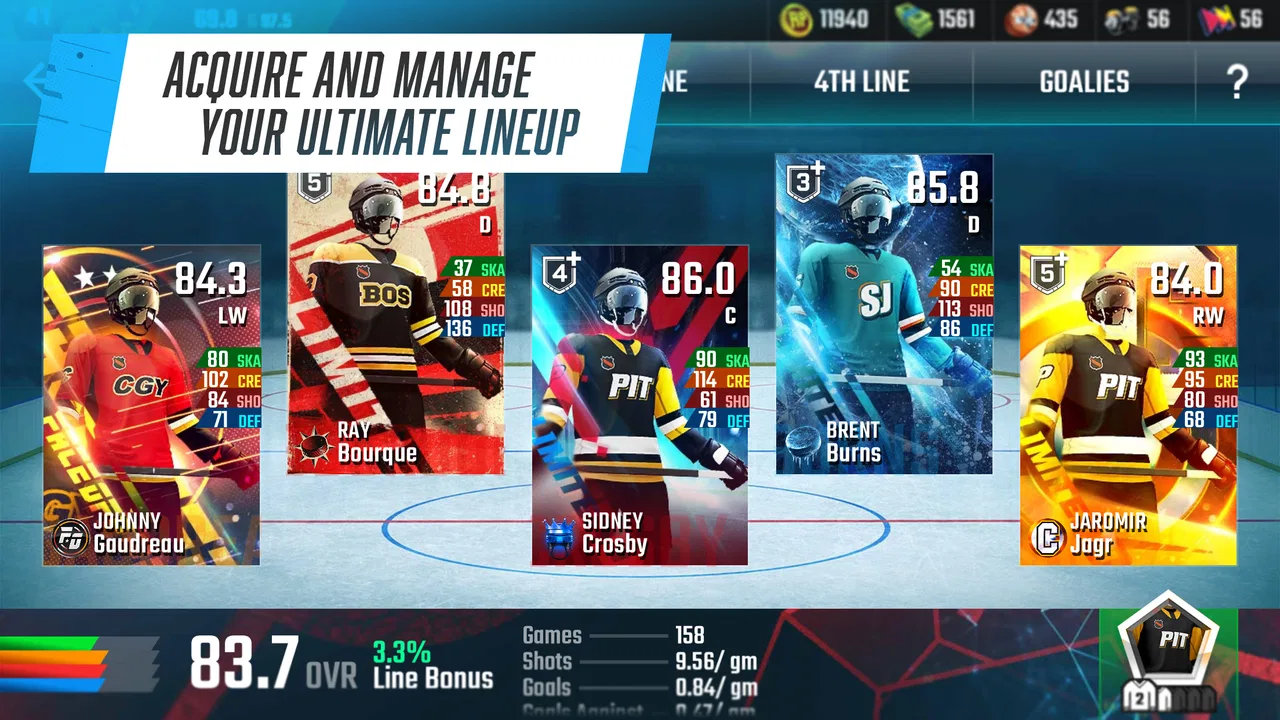
Developed by Fantasy Moguls, Inc., this free sports game puts the general-manager role at the center. The appeal comes from turning a collection of players into a functioning organization, then seeing whether your choices hold up over time. I like that the experience rewards attention rather than reflexes. A short session can be useful for checking the state of a club, while a longer session gives you room to think through the wider direction of the franchise.
The game is available to an Everyone audience, has passed half a million installs, and holds a 4.3 average from roughly fourteen thousand ratings. Those figures suggest a healthy audience without making the game feel like a mass-market arcade title. In my experience, its strongest audience is the hockey fan who enjoys the decisions around the sport as much as the action itself.
You May Also Like

 Blood Strike: 2.5 Anniversary
Blood Strike’s Loadouts Turn Every Drop Into a Tactical Gamble
A close look at Blood Strike’s custom loadouts: how fast access to signature weapons reshapes its battle royale rhythm, rewards preparation, and narrows the gap between fights.

 Pandora - Music & Podcasts
Pandora’s Music Is Easy to Start, but Harder to Recover
Pandora’s strength is its low-effort path from a seed to a station. Its weak spot is how much confidence it asks you to place in connection, setup, and quiet recovery.

 8 Ball Pool
 Is Built on Rivalries, Rematches, and Routine
A close look at the rivalries, rematches, shared routines, and unanswered safety questions that turn a quick pool match into a persistent mobile community.

 Samsung Music
’s Quiet Strength Is Playing What You Already Own
Its reach comes less from spectacle than from dependable access to a personal library. That simplicity is both the app’s strongest retention engine and its ceiling.

 AccuWeather: Weather Radar
AccuWeather Review: A Quick, Clear Forecast for Everyday Decisions
For everyday plans, the best forecast is the one you can understand quickly. AccuWeather makes rain timing, radar, and local conditions easy to act on, with a few trade-offs.

 Hill Climb Racing
Why Hill Climb Racing Still Turns Crashes Into One More Run
A tiny car, a bumpy hill and one more upgrade: Hill Climb Racing keeps resurfacing because its simple chaos makes every near-miss feel personal.
More From Our News Desk



How the current version feels to play
The current version is 6.4.8, and that number is useful mainly as a sign that this is an established product rather than a brand-new experiment. The game originally appeared on February 22, 2018, so existing players have had time to become familiar with its approach. I would not judge it as a newly launched management game that still needs to discover its identity. Its identity is already clear: build, manage, and test a hockey franchise through strategic choices.
That focus gives the game a different rhythm from most mobile sports alternatives. In a typical arcade hockey title, I expect to spend my attention on movement, timing, shots, and defensive reactions. Here, I spend more time asking whether a decision improves the team as a whole. That makes it a better fit for a commute, a lunch break, or a quiet evening when I want a sports game that does not require constant concentration.
The most satisfying part is the sense of responsibility. A strong roster on paper is not automatically a successful franchise, and a single exciting player does not solve every weakness. I found myself thinking in terms of balance: where the team is thin, which decisions support the next game, and which choices are really about a longer plan. That is where the title earns the “Pro GM” part of its name without needing to imitate a full desktop simulation.
One practical tip is to avoid treating every decision as an emergency. When I approached the game as a series of isolated problems, it was easy to make choices that felt good immediately but did not fit the broader direction of the club. A better workflow is to decide what kind of team I want first, then judge individual moves against that idea. This simple habit makes the management layer feel more coherent and reduces random decision-making.
The best use case is steady franchise building
I can imagine opening the game after work, checking the roster, reviewing the latest situation, and making one or two deliberate changes before closing it. That is a realistic way to enjoy it. It does not demand that I sit down for a long uninterrupted session every time. The game works particularly well when I want a sports-themed decision game that can be revisited in small pieces.
It is also a good option for someone who follows hockey but does not want the physical demands of a controller-based game. The satisfaction comes from understanding the consequences of choices, not from mastering a complicated control scheme. Players who enjoy fantasy sports, team-building games, or management simulations will probably recognize the appeal quickly.
There is a trade-off, though. Because the focus is on running the franchise, the game may feel less dramatic to someone who wants to personally skate, shoot, and defend. The hockey setting is important, but it is the framework for strategy rather than a substitute for an action game. I would skip it if the main reason you play sports games is the thrill of direct control.
What the long-running version means for new and returning players
The release history gives the game a useful sense of maturity. A title that began in 2018 and has reached version 6.4.8 is not presenting itself as a one-off novelty. For a new player, that can make the experience easier to trust: the central concept has had time to settle, and the current build represents a later stage of the product’s life rather than its first rough attempt.
For an existing player, the version number is more relevant as a marker of continuity than as proof of a particular feature. I would not assume that every update transforms the game. In a management title, refinement can be just as important as visible additions. Changes that make menus, progression, or decision-making easier to follow can matter more than a flashy new screen, even when they are not immediately obvious during a short session.
That is why I recommend returning players judge the current build by how smoothly it supports their established routine. Start with a familiar franchise, repeat the decisions you know well, and then look for places where the flow feels different. This is more reliable than expecting a version number alone to explain the whole evolution of the game.
New players should also give themselves time before deciding whether the game is for them. The first impression can be quieter than an action-focused hockey game because the reward comes from connecting decisions over time. I found the experience more enjoyable once I stopped waiting for constant spectacle and started treating each choice as part of a season-long experiment.
Where the management design earns its place
The strongest design choice is the separation between being a fan and being the person responsible for the franchise. I am not simply celebrating a favorite player or chasing a single exciting match. I am trying to make the whole organization work. That perspective creates useful tension: a move that looks attractive in isolation may not be the right move for the team I am building.
A second strength is the way the game encourages conditional thinking. Instead of asking only, “Is this good?”, I found myself asking, “Is this good for this roster, at this point, with this plan?” That is a more interesting question and one that gives the game replay value even without relying on constant action.
A third, less obvious strength is how well it can support different levels of involvement. I can play casually by making broad choices and checking in regularly, or I can become more analytical by tracking patterns in my own decisions. The game does not require me to turn every session into a spreadsheet exercise, but it gives thoughtful players room to create their own method.
My preferred method is to keep a simple mental rule for each franchise. For example, I might prioritize stability, development, or immediate competitiveness. Then I ask whether a proposed move serves that rule. This prevents the common management-game mistake of changing direction every few minutes because one option looks appealing. It also makes successes and failures easier to understand.
Where it differs from the usual sports alternatives
Compared with an arcade hockey game, this title offers less direct excitement and more delayed satisfaction. You will not get the same feeling as manually setting up a shot or making a last-second defensive play. In exchange, the game gives more attention to the decisions surrounding a team. That makes it better for strategic players and worse for anyone who wants a fast match above all else.
Compared with a large, traditional sports-management simulation, it is easier to approach on a phone. I do not need to commit to an elaborate desktop-style session just to make progress. The compromise is that players seeking maximum depth, exhaustive statistics, or the feel of a full professional front-office simulator may find the mobile format less demanding than they want.
Compared with fantasy sports, the experience is more self-contained. I am managing a franchise inside the game rather than depending on the emotional swings of a real-world league. That can be a benefit when I want control over the direction of a team, but it may not satisfy someone whose favorite part of fantasy sports is competing with friends or reacting to live events.
The useful question is not whether it is the “best” hockey game in general. It is whether I want to manage a hockey franchise instead of directly playing hockey. Once that distinction is clear, the game becomes much easier to evaluate.
Free to start, with a purchase decision worth considering
The game is free to download, which makes it easy to test without committing money first. There are in-app purchases ranging from $0.99 to $79.99 per item, so I would approach the purchase layer carefully. The wide range means a new player should decide in advance whether they are comfortable staying with the free experience or setting a strict spending limit.
My advice is to play long enough to understand the basic management loop before buying anything. In a strategy game, spending early can hide whether I genuinely enjoy the decisions or simply enjoy moving faster. I would also avoid purchasing because of one disappointing result. A bad stretch is part of the management experience, and paying to erase every setback can remove the very tension that makes the game interesting.
This is especially important for families, even though the age rating is Everyone. A suitable content rating does not automatically mean every purchase decision is suitable for every household. If children use the device, I would set purchase controls and explain that free access and optional spending are separate choices. That is sensible for any game with a broad range of items.
Players also ask whether the game needs a powerful phone. The stated minimum operating-system requirement is Android 7.0, which places it within reach of many older compatible devices. Still, compatibility is not the same as identical performance on every phone. I would keep expectations realistic if the device is old, especially if menus feel slower than they do on newer hardware.
The friction points I would want new players to know
The main limitation is that the game asks for patience. The strategic payoff is not always immediate, and players who need constant action may interpret that slower pace as a lack of excitement. I do not see this as a flaw in the concept, but it is a genuine mismatch for some people. The game is more rewarding when I enjoy planning than when I am chasing quick stimulation.
Another source of friction is the possibility of overthinking. Management games can make every choice feel important, even when a simple decision would be enough. I found that setting a clear purpose for each session helped. Sometimes I was checking the state of the franchise; sometimes I was making one meaningful adjustment. Trying to optimize everything at once made the experience feel heavier than it needed to be.
The free-to-play structure can also affect how I judge progress. If I feel pressure to accelerate, the game becomes less relaxing. My solution is to treat purchases as optional conveniences rather than requirements and to measure success by the quality of my decisions. That approach keeps the strategic part in the foreground.
Finally, this is not the ideal choice for someone who wants a social sports competition first. If your priority is real-time play against other people, direct control, or a highly visual match presentation, another hockey game will likely suit you better. This title is for the person who enjoys being behind the scenes.
What I would watch as the game continues
For the future, I would pay attention to whether updates continue to make the management loop clearer without burying it under unnecessary complexity. The current version shows an established product, but continued evolution should preserve the quick, approachable sessions that make a mobile franchise game practical.
I would also watch how the purchase system fits into long-term progression. Optional spending is easier to accept when the free path still lets a patient player make meaningful decisions. The best balance is one where purchases feel like a choice, not a substitute for understanding the franchise.
Existing users should look for improvements that affect everyday flow: easier navigation, clearer consequences, and better support for returning to a franchise after a break. New players should judge the game by those same practical qualities rather than by the promise of a single exciting moment.
After spending time with it, I see Franchise Hockey: Pro GM as a focused mobile sports-management game with a clear audience. I recommend it to hockey fans who like planning, gradual progress, and the challenge of making a whole franchise work. I would not recommend it to someone looking for arcade controls or a full-scale desktop simulation. For me, its best quality is the way it turns ordinary check-ins into meaningful team decisions, provided I am willing to play patiently and keep my spending choices deliberate.
FAQs for Franchise Hockey: Pro GM
01What is Franchise Hockey: Pro GM about?
Franchise Hockey: Pro GM is a simulation game where players take on the role of a General Manager for a professional hockey team. The game focuses on strategic decision-making, allowing players to manage team rosters, trade players, and oversee game strategies. This immersive experience caters to hockey enthusiasts who enjoy managerial challenges.
02Is Franchise Hockey: Pro GM free to play?
Yes, Franchise Hockey: Pro GM is free to download and play on both Android and iOS devices. However, the game includes in-app purchases, which allow players to buy additional content or features. While optional, these purchases can enhance gameplay by accelerating progression or unlocking exclusive items.
03What are the system requirements for Franchise Hockey: Pro GM?
Franchise Hockey: Pro GM requires a minimum of iOS 10.0 or Android 5.0 to run smoothly. It is optimized for modern smartphones and tablets, ensuring it performs well without draining your device’s battery excessively. For the best experience, ensure your device has sufficient storage space and meets these system requirements.
04Can I play Franchise Hockey: Pro GM offline?
No, Franchise Hockey: Pro GM requires an internet connection to play. The game’s online features, such as live updates, player trading, and competitive leagues, need connectivity. Additionally, staying online ensures you receive regular updates and access to new content, enhancing your gaming experience.
05How does player progression work in Franchise Hockey: Pro GM?
Player progression in Franchise Hockey: Pro GM is achieved through managing and developing your team effectively. As you make strategic decisions, such as player trades and training regimes, your team will improve over time. Success in leagues and tournaments also contributes to progression, unlocking new challenges and rewards.
Pros
- In-depth team management features.
- Real-time player stats updates.
- Engaging league simulations.
- Customizable team strategies.
- User-friendly interface.
Cons
- In-app purchases can be pricey.
- Requires constant internet connection.
- Occasional matchmaking delays.
- Graphics could be more polished.
- Limited tutorial for beginners.

Franchise Hockey: Pro GM
Gallery